Stuck?  support@mecway.com
support@mecway.com

Mecway
FEA
Damage Initiation

I have been experimenting a little with damage initiation now its included in 2.23, I have followed a simple tensile test i noticed someone else was experimenting with.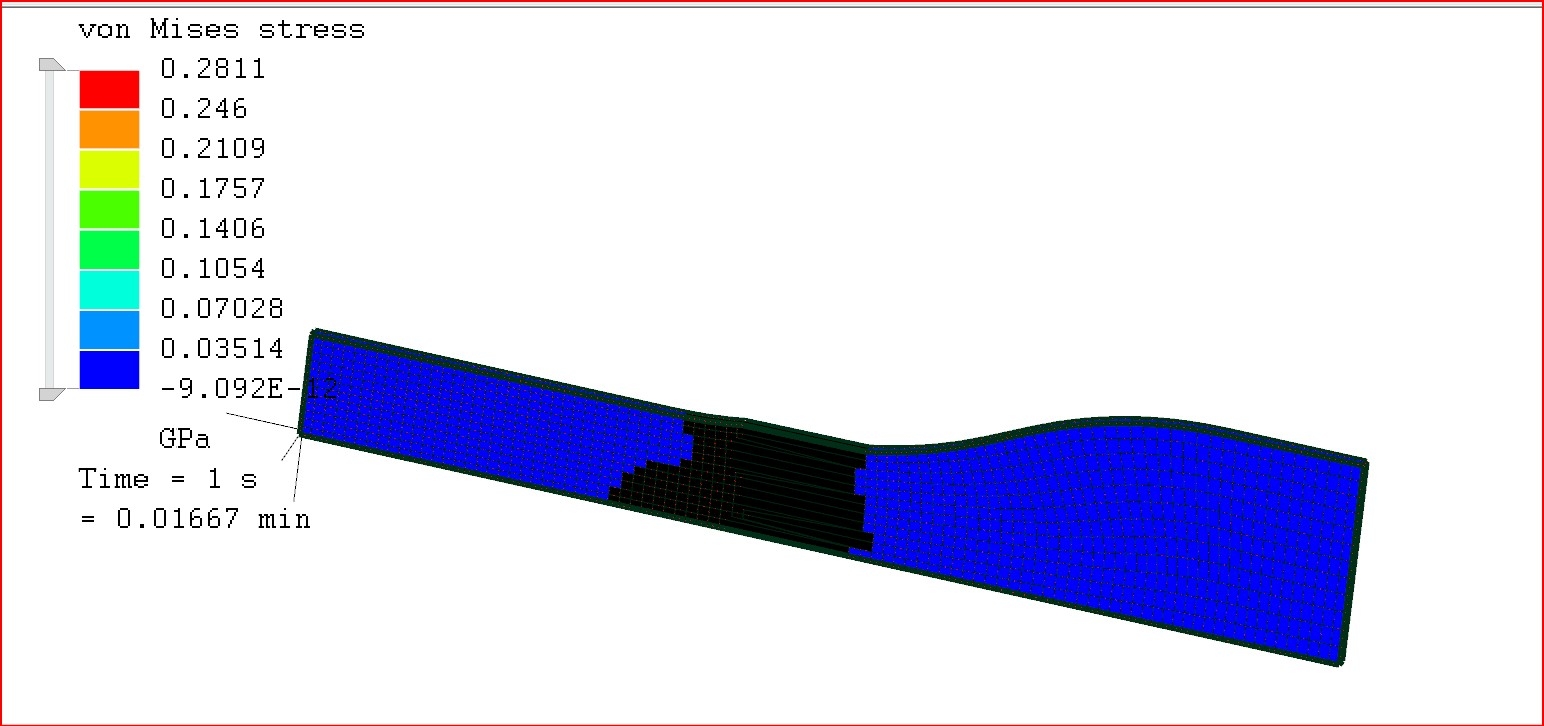 I have tried to add a custom card but I am unsure if I have done this correctly
 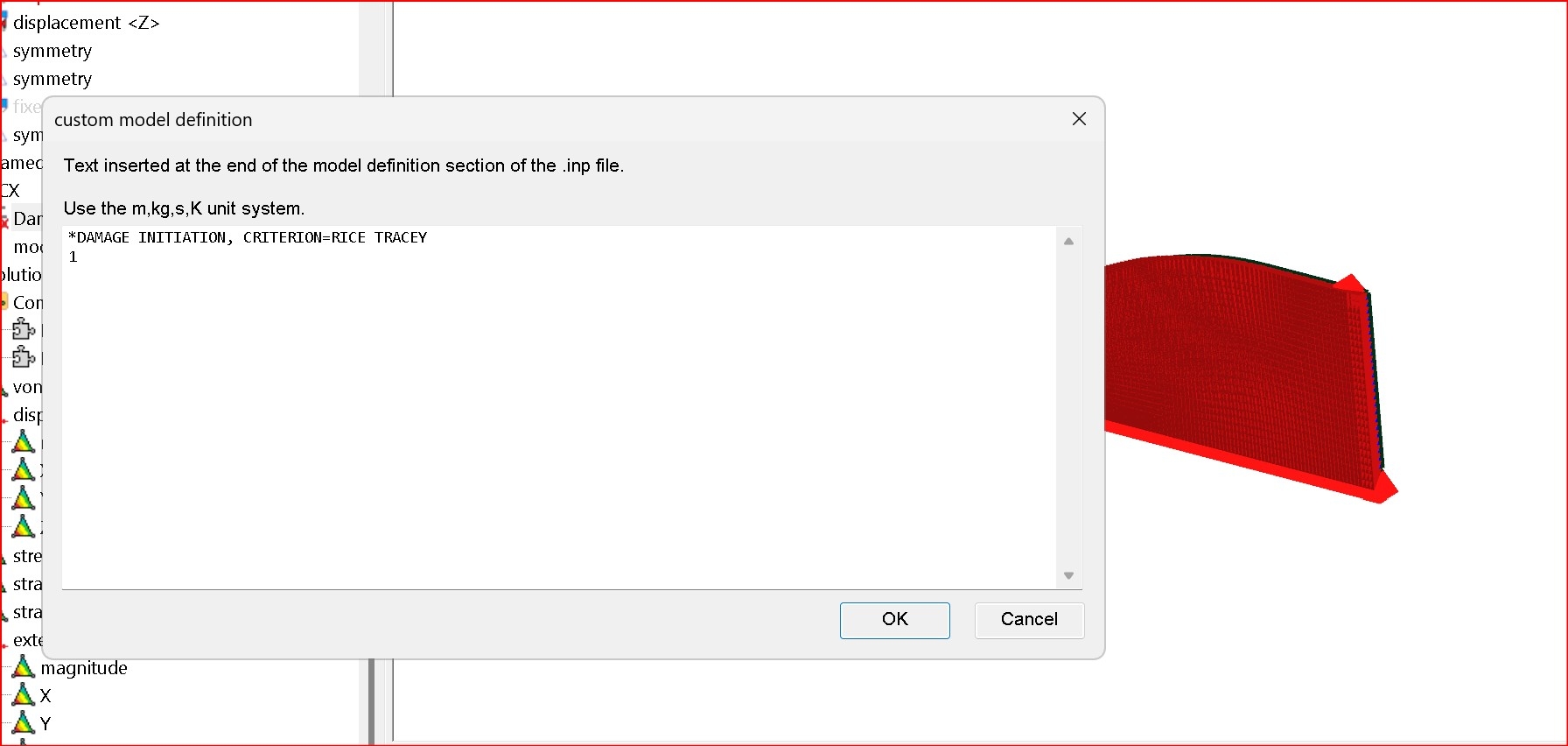 It appears to have done something to the analysis but I'm not sure exactly what. I think once an element exceeds yield it gives up fighting. If I can understand better what is occurring here I think this may be useful in predicting failure point and certainly mechanisms in some parts. By adding this in a custom card I wonder if it is place in the correct place in the .inp file in the calculation? The solution is a little odd in that once any damage starts there is zero stress in the rest of the part and no elastic strain is recorded. (with the damage initiation removed there is some plastic deformation). Also I experimented with a large range of values for the Rice Tracey number and it appears to have no affect on the results.
So my question really is have I applied this criteria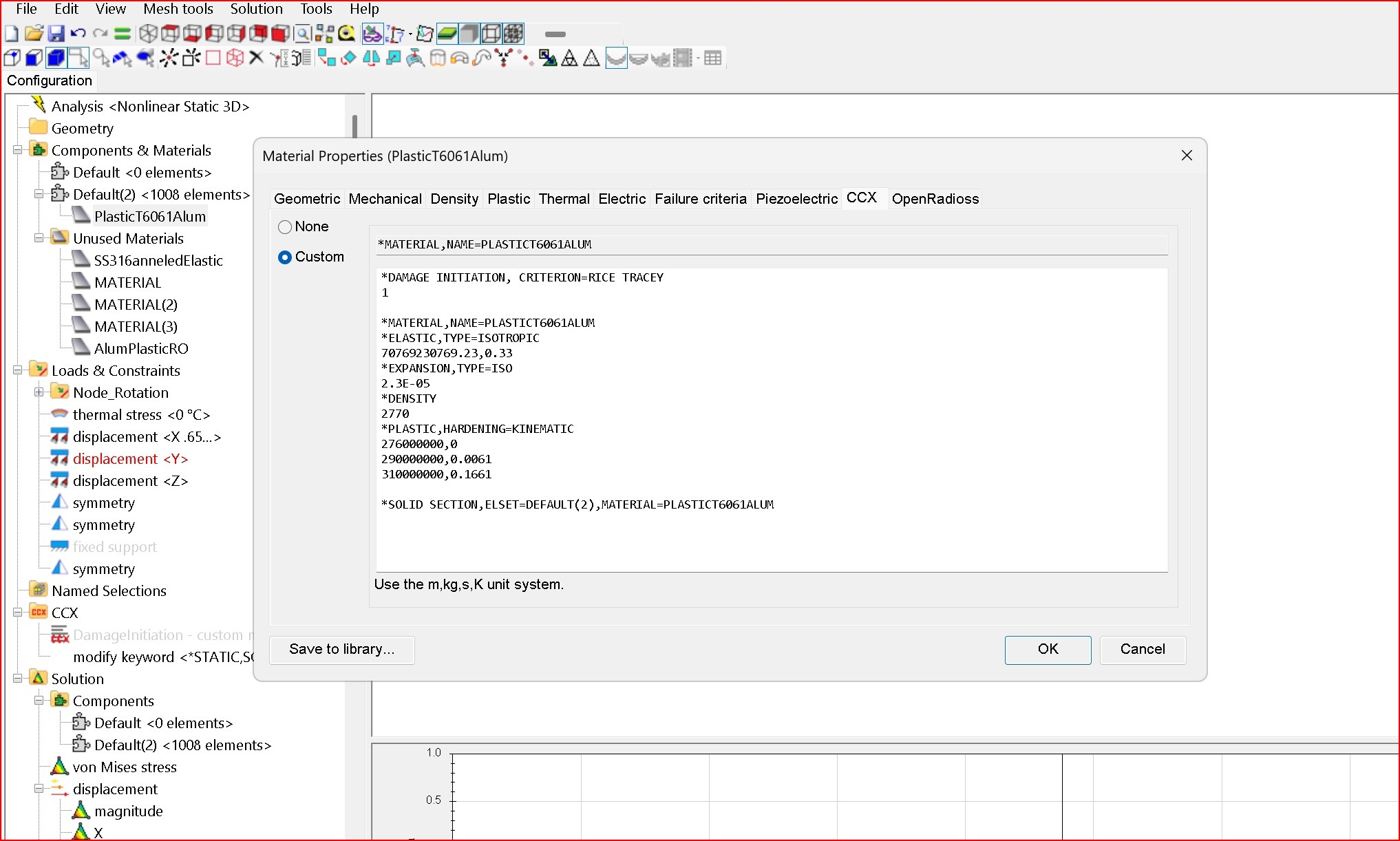
. I did try inserting it in the CXX custom material input but had no luck with that -mu guess is this is the likely to be the correct way to do it but I need some help as to how.
As an aside I also wanted to know why there is a difference between summing up external forces over faces and nodes -in this analysis i can see the different solutions as below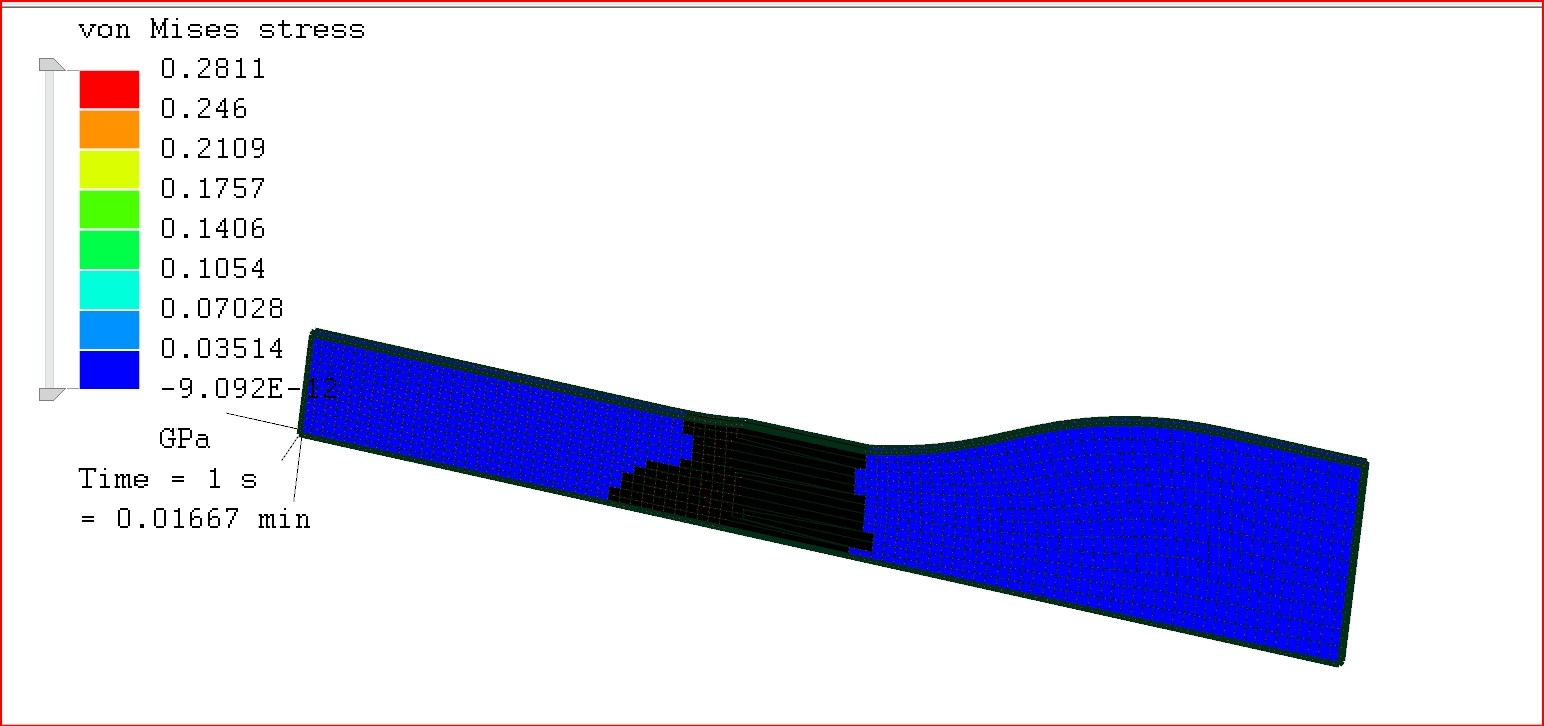
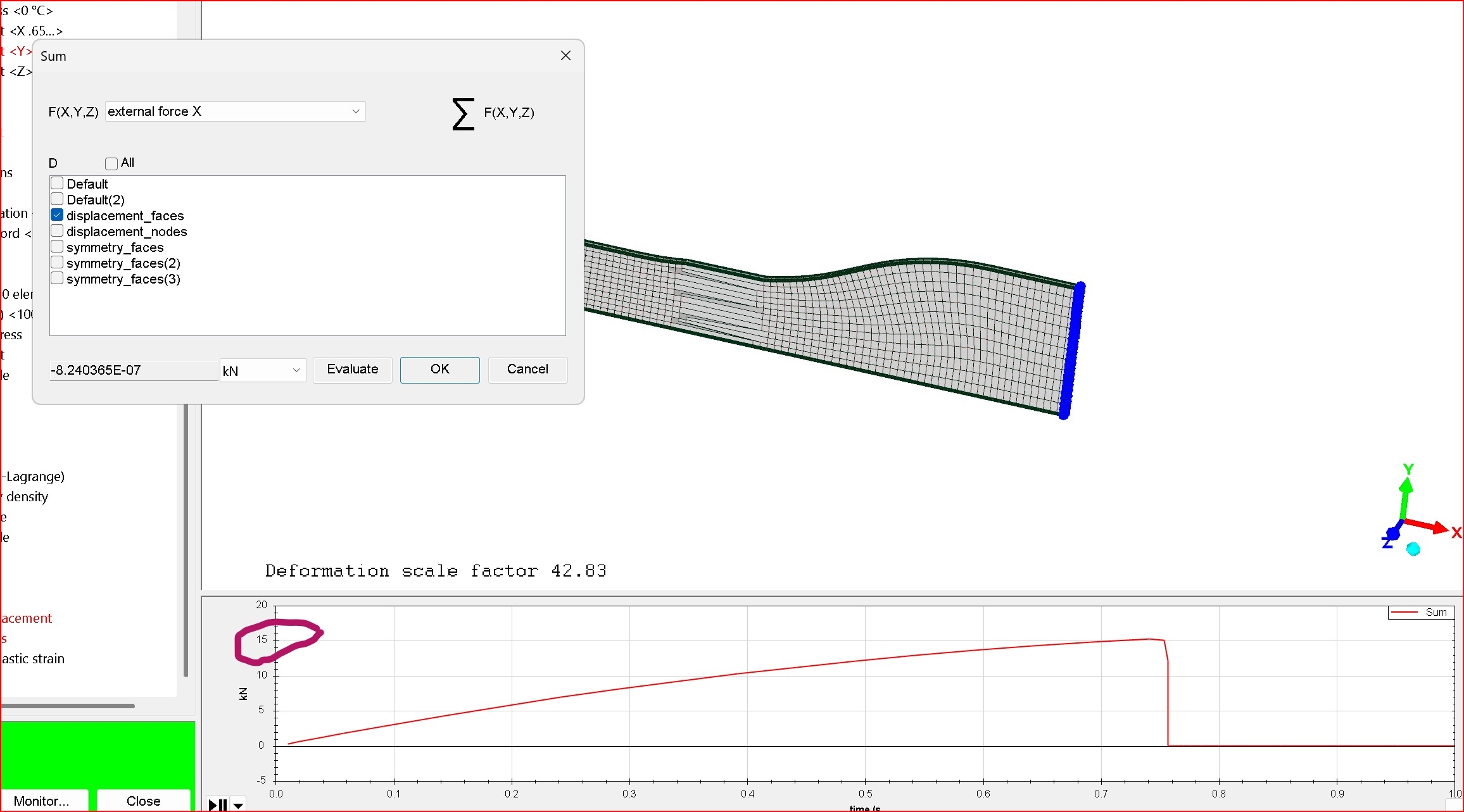 the one based over the faces in this case looks like it gives a more likely answer
I have tried to add a custom card but I am unsure if I have done this correctly It appears to have done something to the analysis but I'm not sure exactly what. I think once an element exceeds yield it gives up fighting. If I can understand better what is occurring here I think this may be useful in predicting failure point and certainly mechanisms in some parts. By adding this in a custom card I wonder if it is place in the correct place in the .inp file in the calculation? The solution is a little odd in that once any damage starts there is zero stress in the rest of the part and no elastic strain is recorded. (with the damage initiation removed there is some plastic deformation). Also I experimented with a large range of values for the Rice Tracey number and it appears to have no affect on the results. So my question really is have I applied this criteria
. I did try inserting it in the CXX custom material input but had no luck with that -mu guess is this is the likely to be the correct way to do it but I need some help as to how.
As an aside I also wanted to know why there is a difference between summing up external forces over faces and nodes -in this analysis i can see the different solutions as below
the one based over the faces in this case looks like it gives a more likely answerHowdy, Stranger!
It looks like you're new here. If you want to get involved, click one of these buttons!
Comments
It looks like there should be two parameters for RICE TRACEY so I added a 1 as the second one. It would default to 0 otherwise. Perhaps that's why it failed too early?
The selections listed the Sum tool are confusing. displacement_faces means the nodes of the faces of a displacement constraint that's applied to faces. That's the 63 nodes at the +X edge in this case. displacement_nodes is the nodes of a displacement constraint applied to nodes, which is the single node with at the origin in this case.